

Transit is key to downtown Seattle mobility during tunneling, tolling
February 4, 2013
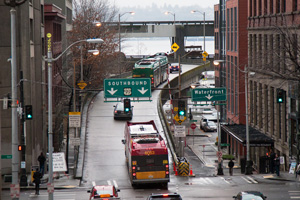
Over the past two years, as work on the Alaskan Way Viaduct replacement has disrupted traffic around downtown Seattle, Metro has played a key role in reducing congestion and delays and giving people reliable transportation to and from the Seattle core. Using project mitigation funds, we have substantially increased transit service on corridors affected by the construction, attracting thousands of new riders and contributing to a sizeable decline in vehicles on the viaduct.
But funding for this critically important enhanced service runs out in 2014 — when several more years of construction and the start of tolling still lie ahead. Loss of the service would mean more crowded buses, fewer options for commuters, heavier traffic congestion and longer delays for all of us. It's critical that we find a solution for maintaining the transit service that keeps us moving.
Transit can unlock gridlock
The Washington State Department of Transportation (WSDOT) provided $32 million to Metro for the current enhanced transit service as a way to reduce construction delays. Metro added 30 peak-period trips and made adjustments to keep buses on time. The enhancements were made on routes between West Seattle, SODO, Georgetown, Magnolia, Ballard, North Seattle and downtown Seattle — with the majority of increases in routes serving West Seattle.
The enhanced service got remarkable results. Bus ridership on the viaduct increased 22 percent — nearly 17,000 new daily riders. There are now 25,000 fewer vehicles on the viaduct every day, a 23 percent decline that is helping everyone keep moving.
Service enhancements that are at risk when funding ends
- 30 peak period trips on six routes:
18 X, 21 X, 56 X, 120, 121 and 358. Twenty-two of these trips are West Seattle-downtown routes. - Schedule adjustments on 16 routes: RapidRide C Line, 21 (local and X), 37, 55, 56 X, 57, 113, 116 X, 118 X, 119 X, 120, 121, 122, 123 and 125.
Unfortunately, when the funding runs out in June 2014, about 125 daily bus trips and 7,500 daily transit seats will be lost — while tunnel construction and viaduct demolition continues into 2016. Work on Seattle's central waterfront won't be complete until the end of 2019. Both of these projects will cause major disruptions to the downtown transportation network and limit capacity on streets already full of cars.
Meanwhile — early in 2016 — SR 99 tolling will start. Initial analysis by the Advisory Committee on Tolling and Traffic Management found that toll levels they had studied would divert high levels of traffic to city streets and I-5, adding to our traffic woes. Experience shows that transit can be effective in reducing such impacts and keeping people moving. When tolling started in the SR 520 corridor, increased transit service led to a 25 percent jump in bus ridership and contributed to reliable, free-flowing traffic.
The viaduct project partners — WSDOT, City of Seattle and King County — agreed in 2009 to seek ongoing funding for transit. This was to support bus service as well as improvements to pathways to and through the city center — especially important after midtown access to downtown is eliminated. However, that funding hasn't materialized. As the expiration of current funding approaches, the need for a solution is urgent. That's why Metro is working with local and state agencies and leaders to find a way to preserve current service levels.
Forty percent of commuters working in downtown Seattle use transit. In the best of times, transit is essential to mobility in the city and has ripple benefits far beyond. The need is even greater during the viaduct and waterfront projects. Preservation of robust service in the corridors bearing the brunt of construction will give Seattle's transportation network the capacity we need to keep people and the economy moving.
Sincerely,
Kevin Desmond, General Manager
King County Metro Transit
Rob Gannon
General Manager, King County Metro Transit

If you live in King county, Metro is your public transportation system. I want you to know about our performance and the innovative service improvements we’re bringing your way.
Visit here often to read my newsletter, or sign up to receive it by e-mail.